
We’re not there for drama, we’re there for reality. Think stormchasers with a little Nightcrawler energy, minus the Hollywood nonsense. When an atmospheric river pushed through Northern California on March 12, 2025, bringing high winds and heavy rain, we followed the damage to see what linemen actually face after the storm passes.
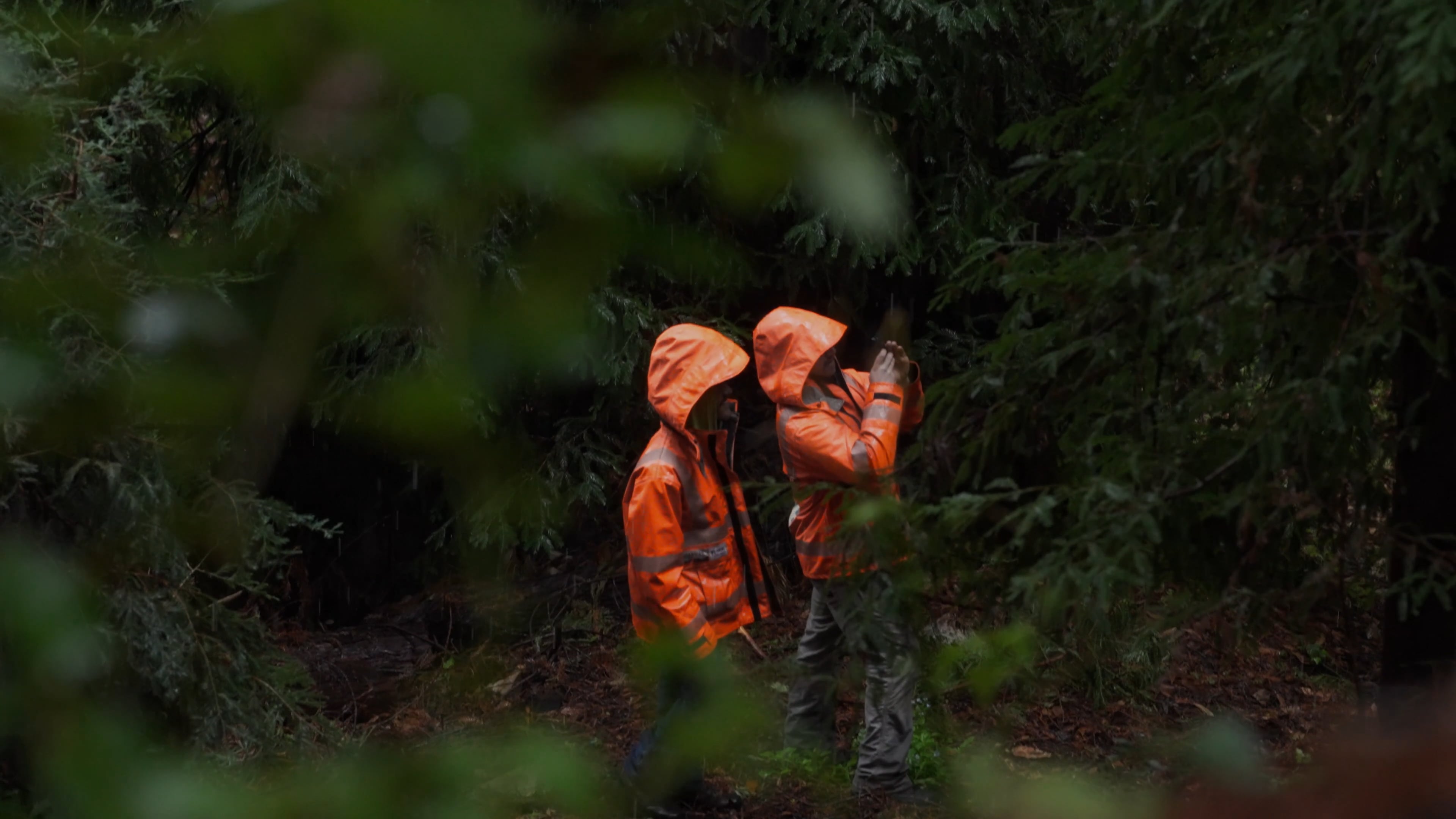
A tree came down in a small neighborhood outside Scotts Valley, just north of Santa Cruz. The result: a primary line down in a steep, hard-to-access wooded ravine. Exactly the kind of situation that slows restoration and puts crews at risk.
Even knowing where to look, it took time to physically find the downed line. Dense trees, uneven terrain, and limited access through an easement made this a challenge, something linemen deal with every day. The line was de-energized, which made access possible, but locating the fault was still far from easy.
This is where Gridscopes make a difference.
Mounted upstream on the pole, the Gridscope identified the fault, its cause, and its location within minutes. Instead of searching blindly through a ravine after a storm, crews can be directed straight to the problem area, confirm the issue, and get to work faster.
Even in the rain, a downed line like this is still a fire risk, especially in wildfire-prone territory. Faster fault detection means shorter outages, safer conditions for crews, and less time a hazard sits unnoticed in the field.
The goal is simple:
Find the fault faster. Send crews where they’re actually needed. Shorten outages. Reduce risk.
This video shows why that matters.