Case study
Brigham City Public Power Averts Wildfire on Festival Day
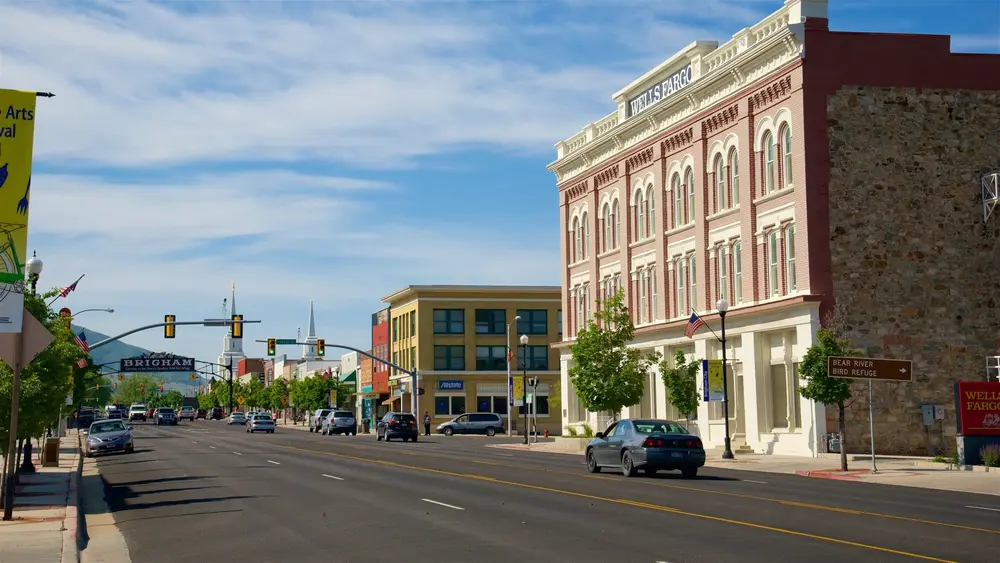
Brigham City Public Power faces growing wildfire and avian-strike exposure across a vegetation-dense service territory ringed by a federal bird refuge.
Brigham City is a municipal utility in Box Elder County, Utah, serving roughly 9,000 meters and 25,000 residents at the northern edge of the Wasatch Front. The service territory is small but operationally complex: a federal bird refuge wraps a portion of the city, vegetation-heavy distribution circuits run the perimeter, and transmission corridors carry across mountainside terrain prone to fast-moving grass and brush fires. Like every utility working aging infrastructure under growing load, Brigham City’s crews spend most of their hours on construction and new growth — and most of their after-hours calls hunting causes they can’t see.
That is the chronic condition AGR is built to resolve. Traditional protection systems detect electrical faults after they happen, and SCADA can confirm that something tripped on a feeder — but neither can tell a crew which structure to inspect along a two-mile stretch of line at night, in vegetation, with weather closing in. The result is hazard awareness delay: the window between when a hazard occurs on the line and when operators have the information to do something about it.
That’s where Gridware or a Gridscope device comes in. It gives us those details. It gives us real-time answers. It gives us the data, the needle in the haystack. ~ Troy Dahlgren, Superintendent, Brigham City Public Power
Brigham City Pinpoints Hazards Down to the Exact Structure
Brigham City joined Gridware’s pilot through UAMPS (Utah Associated Municipal Power Systems), deploying approximately 50 Gridscope devices across the highest-exposure portions of the system: the bird-refuge perimeter, the vegetation-dense distribution circuits on the city’s west side, and the transmission corridor running across the northern and northeastern mountainside. The deployment was designed to put eyes where the utility was already losing visibility — known bird-strike zones, vegetation contact points, and circuits hit repeatedly by reclosers without a clear cause.
In the pilot, AGR has delivered three capabilities that traditional protection and SCADA could not:
- Structure-level fault localization. Where SCADA confirms that a recloser actuated somewhere on a circuit, Gridscope identifies the specific pole — eliminating the patrol that previously consumed the first hour of every after-hours call.
- Visibility into “ghost faults.” A branch contacts a line and burns clear. A bird strikes an insulator and falls away. Half of Brigham City’s after-hours dispatches end without a visible cause — Gridscope captures the event whether or not a fault sustains.
- Multi-modal hazard detection. Physical, environmental, and electrical signals — vibration, acoustics, arc detection, and pole-condition data — surface hazards that don’t trip protection at all.
Gridware AGR Catches an Ignition During Peach Days
On September 6, 2024, at midday, Brigham City was hosting Peach Days — the community’s annual festival, which draws roughly 130,000 people into a town of 25,000. Car shows, booths, and carnivals filled the streets. On the mountainside above town, a turkey vulture made contact with an energized 21 kV transmission line, flashing across an insulator. The arc sent sparks down into dry grass. A brushfire started.
Gridware identified the event in real time and pinpointed the exact structure where it had occurred. Brigham City had crews working the festival that day; a line crew reached the pole within five to six minutes, with a wildland fire crew two minutes behind them. The grass fire was knocked down on the mountainside before it could run.
It is like having a lineman pair of eyes on every single structure. ~ Troy Dahlgren, Superintendent, Brigham City Public Power
Without AGR, the sequence would have looked very different. The utility’s SCADA system did register a recloser actuation — but along a two-mile stretch of transmission line crossing mountain terrain, the actuation alone could not say which structure. A visual patrol would have begun at one end of the circuit; the fire would have been found only once it grew large enough to be seen from below. In red-flag terrain, with 130,000 people gathered downhill, that delay is the difference between an incident and a disaster.
Gridscope intervened, and it allowed us to go right to the exact structure where that event took place. Our SCADA couldn’t tell us which structure had the event take place, but Gridscope could. ~ Troy Dahlgren, Superintendent, Brigham City Public Power
Eyes on Every Structure
For a small municipal utility, the calculus around redundancy is unforgiving. Industrial customers want redundant feeds; full redundancy is prohibitively expensive to build. What a utility can offer in its place is faster, more confident response — the right crew at the right pole with the right equipment, before a fault becomes a fire or an outage stretches into a shift. That is the operational ground AGR occupies at Brigham City, and the reason the utility is working to expand the deployment further across its system.