
By Edith Lee, Powerpeder and Griddie
The first conversation happened before the race even started. We were lining up for the port-a-potties, each of us dressed as power poles, when a woman walked over to ask if we could swing by her place later. Her power was out. She wouldn't be the last person to flag us down.
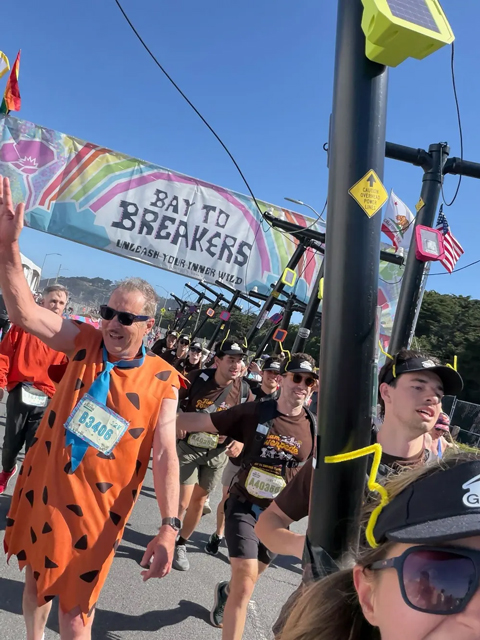
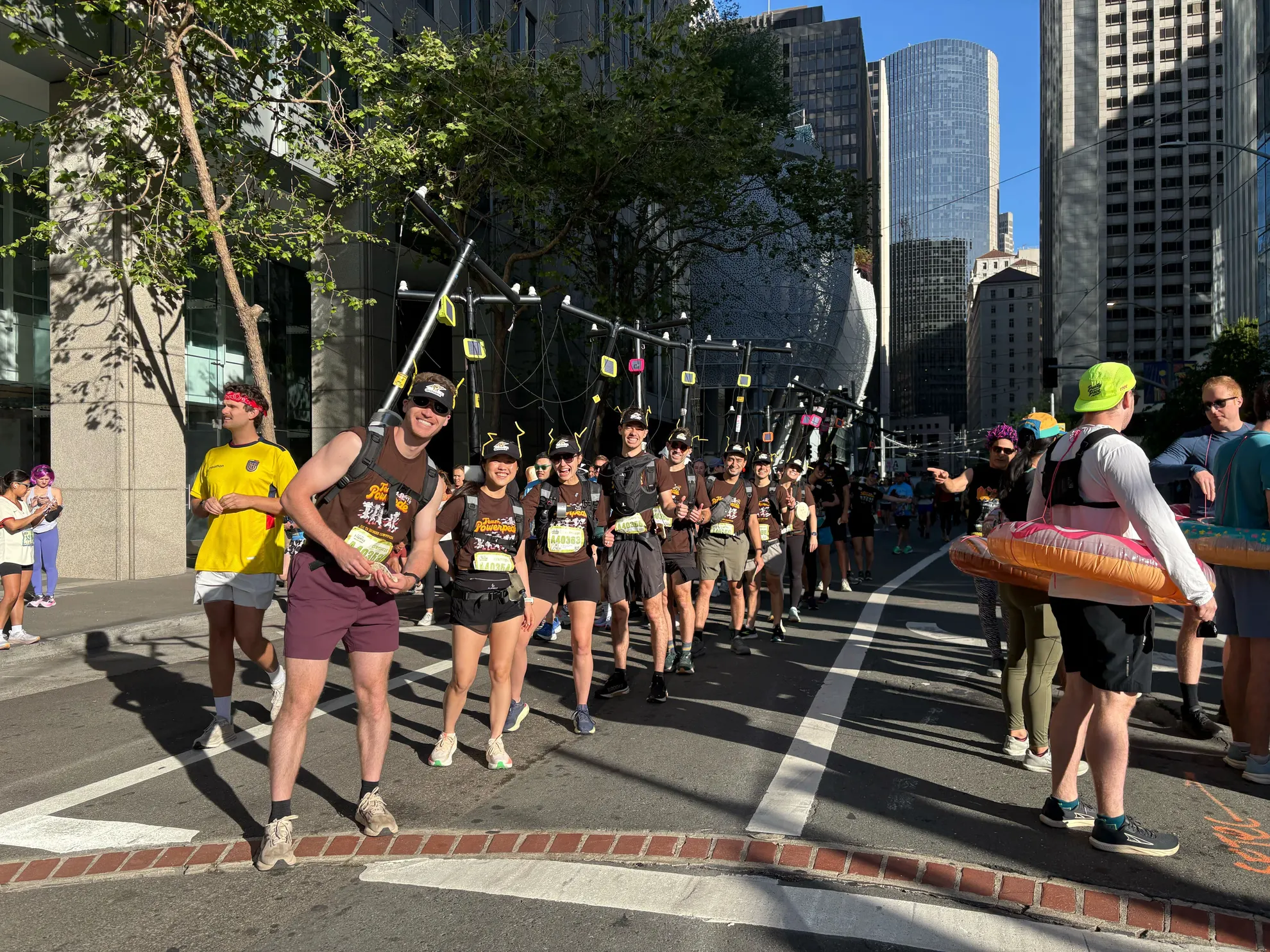
Bay to Breakers is a 12-kilometer city-wide costume party disguised as a race in San Francisco. It is named for its geography: starting at the San Francisco Bay and finishing at where the waves "break" at Ocean Beach. It passes through San Francisco landmarks: the Civic Center, Hayes Street Hill, the Panhandle, and Golden Gate Park. One of the race's signature traditions is the centipede: thirteen or more runners linked together by cords, thematically costumed, and running the 12k as one unit. Team Gridware ran as fourteen power poles, strung together by three power lines, called the Powerpede.
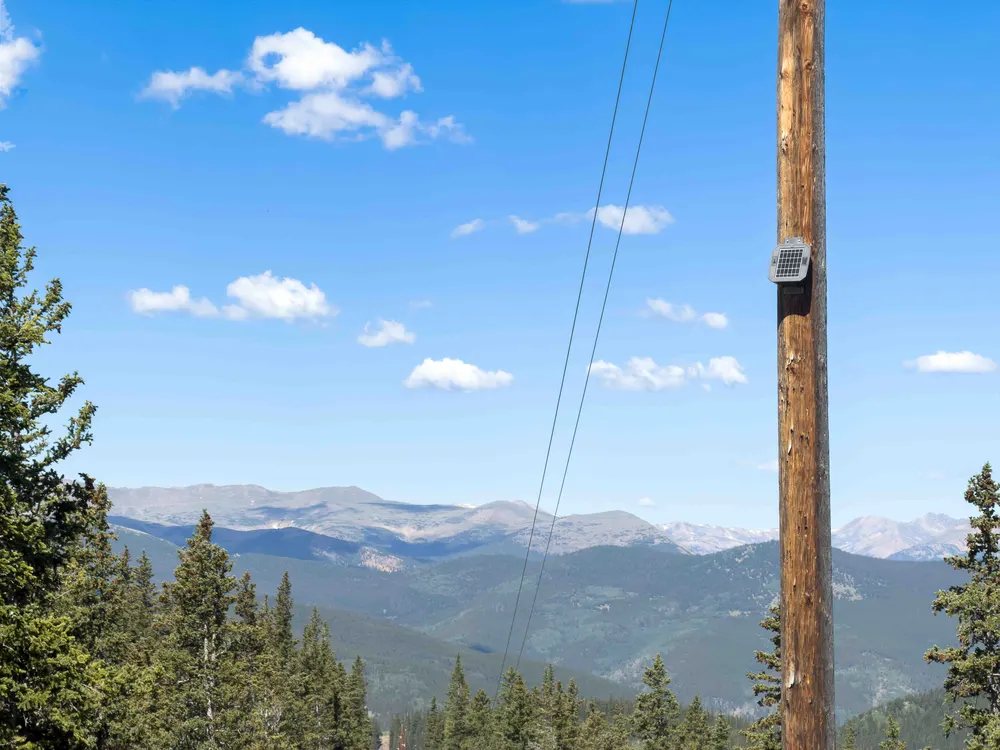
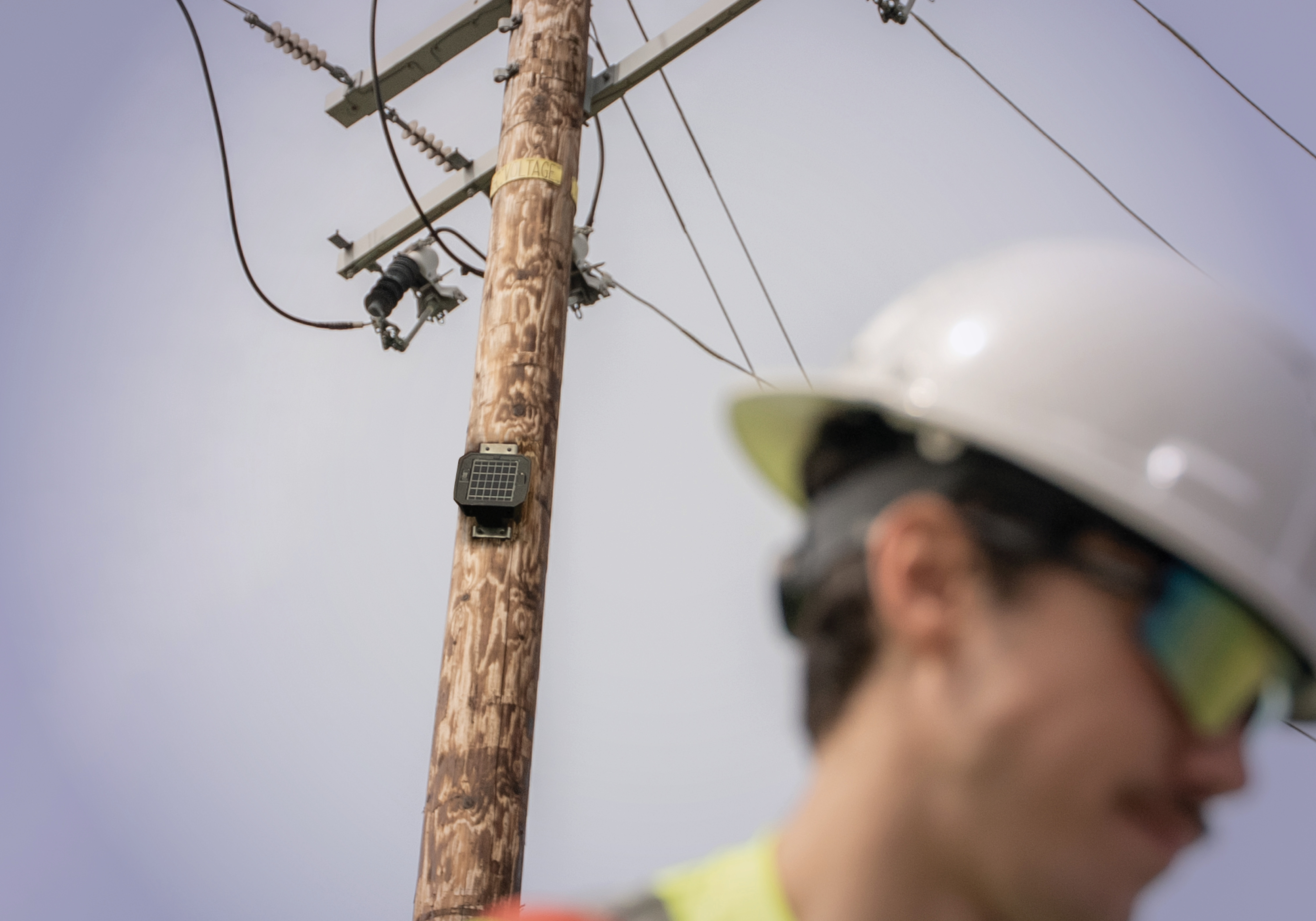
Gridware detects hazards on the electrical grid before they become outages or catastrophes by reducing the gap between when something goes wrong on the grid and when anyone knows about it. When power poles are what you work on every day, fourteen of them in formation is the obvious centipede costume.
The idea came from Zach, our Sr. Research Engineer on Physical R&D, whose day job involves keeping the grid running. On Sunday he was also literally running as the grid. Melina, our Sr. Systems Research Engineer, drew up the costumes and built them with the team across a string of after-work hours and weekends: visually epic, light, durable, and ergonomic enough to run 7.5 miles in.
Before we even took off, we discovered our Powerpede behaved like a real grid subject to the elements. On the walk to the start line, our power lines kept clipping low-hanging branches. Tree strikes are one of the most common events we detect on the real grid, and there we were, generating them at scale. During the traditional pre-race tortilla toss, the lines between our poles caught a few tortillas (not a hazard type we see in production). Once we set off, the lines between us swung together—that's called line slap, and it's something we observe on grid all the time.
Civic Center. Another centipede dressed as an SF cable car ran parallel to us for a stretch, and knowing looks were exchanged across the public-infrastructure division. We're pretty sure we won.
Hayes Street Hill. We came across the Go Achilles crew running with a woman in a wheelchair. Zach was at the front of our centipede, so all 14 of us shuffled up the hill together with Zach pushing and the Achilles team setting the pace. They were wonderful, and it was classic Bay to Breakers: strangers becoming a team on the steepest climb of the morning. All around us, the city was doing the same: bands on porches, drinks being handed out, neighbors cheering from stoops. San Francisco being weird, on purpose, in public, with style.
The Panhandle into Golden Gate Park. The recognition drip got steady: high-fives from strangers, selfies with a coworker's spouse, a video from a volunteer at a water station who'd clocked our logo, a photo from a journalist on the sideline. The same question, thirty times: “Are those heavy?” They aren't. Melina's design is that good. SFGate's race coverage referred to us as "telephone poles," which we took with grace.
Ocean Beach. We crossed the line at 1:40:35, somewhere between a pair of mimes with tiny berets and half a baguette between them, and Fred Flintstone. At the finish, someone photographed us with an old-timey camera to commemorate the moment.
Somewhere around the Civic Center, a runner had sprinted past us, pointed, and shouted:
"GRIDWARE! I just interviewed with you!"
We've been thinking about that one since, because it gets at something true: The grid is literally a ubiquitous transnational machine that runs over mountains, behind walls, powering the lights and the trains and the heat. Most of the time, nobody thinks about it. The utilities running it, the line crews maintaining it, the engineers designing it does most of that work out of sight. But for a few hours on Sunday morning, fourteen of us got to make a small piece of it visible, and it turns out a lot of San Francisco was already paying attention.
That same day, Public Safety Power Shutoff events rolled through parts of Northern California and continued into Monday. We thought about the woman at the port-a-potties who lost power that morning.
We'll be back next year.